Bioz is a search engine for life science experimentation. == History == Bioz was founded by Karin Lachmi and Daniel Levitt. Lachmi is a scientist who completed her postdoc in molecular and cellular biology at the Stanford University School of Medicine. During her lab work she found little available data regarding preferable lab tools, reagents and related products for experimentation. There are 50,000 vendors selling 300 million scientific products. She decided to start the company in order to provide researchers with adequate information for that purpose. Co-founder Daniel Levitt is an entrepreneur who sold his company WebAppoint to Microsoft in the year 2000. He also co-founded the company StemRad. At Bioz, Lachmi serves as the Chief Scientific Officer and Levitt serves as the chief executive officer. Bioz claims to have over a million researcher-users from 196 countries. Among the investors are Esther Dyson and the Stanford-StartX Fund. The company's advisory board includes Nobel Laureates in Chemistry Michael Levitt, Roger Kornberg, and Ada Yonath. == Technology == The company uses artificial intelligence, machine learning and natural language processing in order to extract experimentation data from scientific articles, such as the products that researchers used, the companies that supply the products, the protocol conditions that researchers selected, and the types of experiments and techniques. The algorithm ranks products based on how frequently they were used by researchers in their experiments, how recently a product was used, and the impact factor of the journal. The algorithm's output is a Bioz stars score for each product that was mentioned in an article. Bioz is a data-driven platform for product recommendations, which is contrary to platforms such as TripAdvisor and OpenTable that are based on user-generated reviews and ratings. The recommendations and scoring system that the company has developed are meant to assist researchers with the process of developing future medications and finding cures for diseases. They are guided towards products and techniques that were previously used by other researchers when planning and performing experiments. The company's revenue is based on selling SaaS subscriptions to researchers in biopharma companies. They also charge product suppliers for content syndication.
Collabora Online
Collabora Online (often abbreviated as COOL) is an open-source online office suite developed by Collabora, based on LibreOffice Online, the web-based edition of the LibreOffice office suite. It enables real-time collaborative editing of documents, spreadsheets, presentations, and vector graphics in a web browser. Optional applications are available for offline use on Android, ChromeOS, iOS, iPadOS, Linux distributions, macOS, and Windows. It supports the OpenDocument format and is compatible with other major formats, including those used by Microsoft Office. The Document Foundation (TDF), the nonprofit organization behind LibreOffice, states that a majority of the LibreOffice software development is done by its partners like Collabora. Collabora Online is an open-source alternative to proprietary cloud office platforms such as Google Workspace and Microsoft 365. Unlike these services, it can be self-hosted or hosted by third-party providers. The platform is marketed particularly toward enterprises and public institutions seeking greater digital sovereignty and independence from U.S.-based "big tech" companies. Collabora also develops Collabora Office, a standalone desktop and mobile app suite based on LibreOffice. Although Collabora Online has increasingly taken on a central role, both products may be used in parallel, similar to Microsoft Office and Microsoft 365. In November 2025, Collabora released Collabora Office Desktop and renamed the previous product Collabora Office Classic. The new product shares code with Collabora Online and brings the same user interface to the desktop on Linux, Windows and MacOS. A separate version, the Collabora Online Development Edition (CODE), is offered free of charge and is recommended for individuals, small teams, and developers. CODE provides early access to new features and serves as a testing and development platform for open-source community contributors. As TDF does not offer a free version of LibreOffice Online, CODE represents the primary freely available option for organizations and individuals interested in deploying LibreOffice in a web-based, collaborative setting. == Applications == Collabora Online includes several applications for document editing, available through the web-based interface and optional desktop and mobile apps: Collabora Writer – A word processor based on LibreOffice Writer, comparable to Microsoft Word and Google Docs. It supports WYSIWYG editing, styles, formatting tools, comment threads, and change tracking. Collabora Calc – A spreadsheet editor based on LibreOffice Calc, similar to Microsoft Excel and Google Sheets. Features include pivot tables, formulas, data validation, conditional formatting, advanced sorting and filtering, charts, and support for up to 16,000 columns. Compatible with some macros written in VBA. Collabora Impress – A presentation program based on LibreOffice Impress, comparable to Microsoft PowerPoint and Google Slides. It supports master slides, transitions, speaker notes, and multimedia elements. Collabora Draw is not a separate application, most of the functionality of the Draw application is now integrated in Writer and Impress – vector graphics editor based on LibreOffice Draw, comparable to Microsoft Visio and Google Drawings. == Features == Collabora Online can be accessed from modern web browsers without the need for plug-ins or add-ons. It supports real-time collaborative editing of word processing documents, spreadsheets, presentations, and vector graphics. Collaboration features include commenting, version tracking with document comparison and restoration, and integration with communication tools such as chat or video calls. These functions are often enabled through integration with enterprise open-source cloud platforms like Nextcloud, ownCloud, Seafile, EGroupware, GroupOffice and others. Collabora Online can also be embedded or integrated into a variety of third-party applications. Although client apps are not required to use the web-based suite, optional applications are available for offline use on Android, ChromeOS, iOS, iPadOS, Linux distributions, macOS, and Windows. These apps share the same LibreOffice-based core as the server version, ensuring document compatibility across platforms. Development of the LibreOffice core benefits both the online server and the client applications simultaneously. The mobile apps offer touch-optimized interfaces that adapt to different screen sizes and can be used offline, with optional integration into cloud storage services. Collabora Online supports OpenDocument formats (ODF; .odt, .odp, .ods, .odg) in accordance with ISO/IEC 26300. It is also compatible with Microsoft Office formats, including Office Open XML (.docx, .pptx, .xlsx) and legacy binary formats (.doc, .ppt, .xls). Additional supported formats include PDF, PNG, CSV, TSV, RTF, EPUB, and others. The suite can import a range of formats supported by LibreOffice, including Microsoft Visio and Publisher files, Apple Keynote, Numbers, and Pages files, as well as legacy formats used by Lotus 1-2-3, Microsoft Works, and Quattro Pro. The core of Collabora Online is written in C++ and utilizes LibreOfficeKit, a programming interface that enables reuse of much of LibreOffice's existing code for document saving, loading, and rendering. Collabora Online operates on the principle that documents remain on the server, with users viewing tile-rendered images of the document and sending their edits back to the server. The user interface is implemented in JavaScript. For file access and authentication with file hosting services, Collabora Online uses Microsoft's WOPI protocol, allowing compatibility with any service supporting Microsoft 365 integration. == Server == The server component can be self-hosted or deployed through third-party enterprise open-source cloud platforms, allowing organizations to maintain control over data and infrastructure. It is available for various Linux distributions and as a Docker image. The server enables features such as in-browser document editing, file synchronization, and real-time communication. These third-party cloud platforms typically offer additional functionality comparable to services such as Dropbox, Google Workspace, Microsoft 365, or Zoom, including file sharing, calendars, email, contacts, chat, and video conferencing. Collabora Online can be integrated into these applications, as well as with other services such as learning management systems and enterprise content platforms, through open APIs and an SDK. == Reception == Various online and print publications have discussed Collabora Online. In December 2016 the technology website Softpedia mentioned the availability of collaborative editing in version 2.0 and the integration with ownCloud, Nextcloud, and other file synchronization and sharing solutions. In June 2020, ZDNET reported that Collabora Online would be included as the standard office suite in Nextcloud version 19, noting that direct document editing was added to the native video conferencing software Talk. The technology blog OMG! Ubuntu! covered the release of Collabora's Android and iOS apps, emphasizing their offline functionality. In September 2020, Linux Magazine compared Collabora Online with OnlyOffice, noting the flexibility and platform independence of both tools and highlighting Collabora's extensive feature set derived from LibreOffice. === Digital sovereignty === Collabora Online's open-source design and support for self-hosting have made it notable in discussions about digital sovereignty—the ability of users and organizations to control their own data. This is particularly relevant in Europe, where concerns about dependence on U.S.-based "big tech" companies and data privacy have grown in recent years. On 10th June 2025, Microsoft executives under oath in the French Senate admitted that they cannot guarantee data sovereignty and would be compelled to pass French (and by implication the wider European Union) information to the US administration if requested via a warrant or subpoena. The Cloud Act is a law that gives the US government authority to obtain digital data held by US-based tech corporations, irrespective of whether that data is stored on servers at home or on foreign soil. A 2020 briefing by the European Parliament highlighted risks associated with reliance on major technology companies that collect and exploit user data. Legal decisions such as the Schrems II ruling have further underscored these concerns. Several European government agencies have adopted private cloud solutions using Collabora Online and related platforms to enhance data security and maintain control over sensitive information. == History == The former LibreOffice development team from SUSE joined Collabora in September 2013, forming the subsidiary Collabora Productivity. In 2015 Collabora and IceWarp announced the development of an enterprise-ready version of LibreOffice Online to compete wi
Nicolò Cesa-Bianchi
Nicolò Cesa-Bianchi (Italian pronunciation: [nikoˈlɔ tˈtʃɛːza ˈbjaŋki]) is an Italian computer scientist and Professor of Computer Science at the Department of Computer Science of the University of Milan. He is a researcher in the field of machine learning, and co-author of the books "Prediction, Learning, and Games" with Gabor Lugosi and "Regret analysis of stochastic and nonstochastic multi-armed bandit problems" with Sébastien Bubeck == Education and career == Cesa-Bianchi graduated in Computer Science from the University of Milan in 1988 where he received a PhD in Computer Science in 1993 supervised by Alberto Bertoni. During his PhD, he visited UC Santa Cruz where he worked with Manfred Warmuth and David Haussler. He did his postdoctoral studies at Graz University of Technology under the supervision of Wolfgang Maass. == Research == His research contributions focus on the following areas: design and analysis of machine learning algorithms, especially in online machine learning algorithms for multi-armed bandit problems, with applications to recommender systems and online auctions graph analytics, with applications to social networks and bioinformatics == Awards and honors == Cesa-Bianchi received a Google Research Award in 2010, a Xerox University Affairs Committee Award in 2011, a Criteo Faculty Award in 2017, a Google Faculty Award in 2018, and a IBM Academic Award in 2021. Since 2023 he is corresponding member of the Accademia dei Lincei.
How to Choose an AI Resume Builder
Trying to pick the best AI resume builder? An AI resume builder is software that uses machine learning to help you get more done — it scales effortlessly from a single task to thousands. The best picks balance beginner-friendly simplicity with the depth power users need, and they ship updates often. Whether you are a beginner or a pro, the right AI resume builder slots into your workflow and pays for itself fast. This guide breaks down the top picks, their pros and cons, and who each one is best for.
Lin-Shan Lee
Lin-Shan Lee (Chinese: 李琳山; born 23 September 1952) is a Taiwanese computer scientist. == Education and career == Lee earned a bachelor's degree in electrical engineering from National Taiwan University in 1974, and pursued a doctorate in the same subject at Stanford University, graduating in 1977. He subsequently returned to Taiwan and joined the NTU faculty in 1982. Lee is a 1993 fellow of the Institute of Electrical and Electronics Engineers, recognized "[f]or contributions to computer voice input/output techniques for Mandarin Chinese and to engineering education." The International Speech Communication Association elevated him to fellow status in 2010 "[f]or his contributions to Chinese spoken language processing and speech information retrieval, and his service to the speech language community." In 2016, Lee was elected a member of Academia Sinica.
Uncertain data
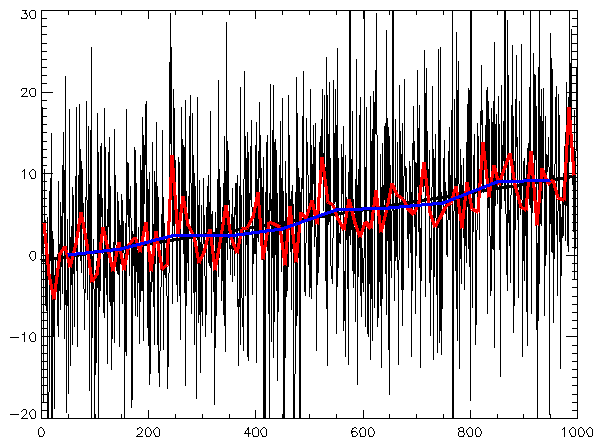
In computer science, uncertain data is data that contains noise that makes it deviate from the correct, intended or original values. In the age of big data, uncertainty or data veracity is one of the defining characteristics of data. Data is constantly growing in volume, variety, velocity and uncertainty (1/veracity). Uncertain data is found in abundance today on the web, in sensor networks, within enterprises both in their structured and unstructured sources. For example, there may be uncertainty regarding the address of a customer in an enterprise dataset, or the temperature readings captured by a sensor due to aging of the sensor. In 2012 IBM called out managing uncertain data at scale in its global technology outlook report that presents a comprehensive analysis looking three to ten years into the future seeking to identify significant, disruptive technologies that will change the world. In order to make confident business decisions based on real-world data, analyses must necessarily account for many different kinds of uncertainty present in very large amounts of data. Analyses based on uncertain data will have an effect on the quality of subsequent decisions, so the degree and types of inaccuracies in this uncertain data cannot be ignored. Uncertain data is found in the area of sensor networks; text where noisy text is found in abundance on social media, web and within enterprises where the structured and unstructured data may be old, outdated, or plain incorrect; in modeling where the mathematical model may only be an approximation of the actual process. When representing such data in a database, an appropriate uncertain database model needs to be selected. == Example data model for uncertain data == One way to represent uncertain data is through probability distributions. Let us take the example of a relational database. There are three main ways to do represent uncertainty as probability distributions in such a database model. In attribute uncertainty, each uncertain attribute in a tuple is subject to its own independent probability distribution. For example, if readings are taken of temperature and wind speed, each would be described by its own probability distribution, as knowing the reading for one measurement would not provide any information about the other. In correlated uncertainty, multiple attributes may be described by a joint probability distribution. For example, if readings are taken of the position of an object, and the x- and y-coordinates stored, the probability of different values may depend on the distance from the recorded coordinates. As distance depends on both coordinates, it may be appropriate to use a joint distribution for these coordinates, as they are not independent. In tuple uncertainty, all the attributes of a tuple are subject to a joint probability distribution. This covers the case of correlated uncertainty, but also includes the case where there is a probability of a tuple not belonging in the relevant relation, which is indicated by all the probabilities not summing to one. For example, assume we have the following tuple from a probabilistic database: Then, the tuple has 10% chance of not existing in the database.
MRF optimization via dual decomposition
In dual decomposition a problem is broken into smaller subproblems and a solution to the relaxed problem is found. This method can be employed for MRF optimization. Dual decomposition is applied to markov logic programs as an inference technique. == Background == Discrete MRF Optimization (inference) is very important in Machine Learning and Computer vision, which is realized on CUDA graphical processing units. Consider a graph G = ( V , E ) {\displaystyle G=(V,E)} with nodes V {\displaystyle V} and Edges E {\displaystyle E} . The goal is to assign a label l p {\displaystyle l_{p}} to each p ∈ V {\displaystyle p\in V} so that the MRF Energy is minimized: (1) min Σ p ∈ V θ p ( l p ) + Σ p q ∈ ε θ p q ( l p ) ( l q ) {\displaystyle \min \Sigma _{p\in V}\theta _{p}(l_{p})+\Sigma _{pq\in \varepsilon }\theta _{pq}(l_{p})(l_{q})} Major MRF Optimization methods are based on Graph cuts or Message passing. They rely on the following integer linear programming formulation (2) min x E ( θ , x ) = θ . x = ∑ p ∈ V θ p . x p + ∑ p q ∈ ε θ p q . x p q {\displaystyle \min _{x}E(\theta ,x)=\theta .x=\sum _{p\in V}\theta _{p}.x_{p}+\sum _{pq\in \varepsilon }\theta _{pq}.x_{pq}} In many applications, the MRF-variables are {0,1}-variables that satisfy: x p ( l ) = 1 {\displaystyle x_{p}(l)=1} ⇔ {\displaystyle \Leftrightarrow } label l {\displaystyle l} is assigned to p {\displaystyle p} , while x p q ( l , l ′ ) = 1 {\displaystyle x_{pq}(l,l^{\prime })=1} , labels l , l ′ {\displaystyle l,l^{\prime }} are assigned to p , q {\displaystyle p,q} . == Dual Decomposition == The main idea behind decomposition is surprisingly simple: decompose your original complex problem into smaller solvable subproblems, extract a solution by cleverly combining the solutions from these subproblems. A sample problem to decompose: min x Σ i f i ( x ) {\displaystyle \min _{x}\Sigma _{i}f^{i}(x)} where x ∈ C {\displaystyle x\in C} In this problem, separately minimizing every single f i ( x ) {\displaystyle f^{i}(x)} over x {\displaystyle x} is easy; but minimizing their sum is a complex problem. So the problem needs to get decomposed using auxiliary variables { x i } {\displaystyle \{x^{i}\}} and the problem will be as follows: min { x i } , x Σ i f i ( x i ) {\displaystyle \min _{\{x^{i}\},x}\Sigma _{i}f^{i}(x^{i})} where x i ∈ C , x i = x {\displaystyle x^{i}\in C,x^{i}=x} Now we can relax the constraints by multipliers { λ i } {\displaystyle \{\lambda ^{i}\}} which gives us the following Lagrangian dual function: g ( { λ i } ) = min { x i ∈ C } , x Σ i f i ( x i ) + Σ i λ i . ( x i − x ) = min { x i ∈ C } , x Σ i [ f i ( x i ) + λ i . x i ] − ( Σ i λ i ) x {\displaystyle g(\{\lambda ^{i}\})=\min _{\{x^{i}\in C\},x}\Sigma _{i}f^{i}(x^{i})+\Sigma _{i}\lambda ^{i}.(x^{i}-x)=\min _{\{x^{i}\in C\},x}\Sigma _{i}[f^{i}(x^{i})+\lambda ^{i}.x^{i}]-(\Sigma _{i}\lambda ^{i})x} Now we eliminate x {\displaystyle x} from the dual function by minimizing over x {\displaystyle x} and dual function becomes: g ( { λ i } ) = min { x i ∈ C } Σ i [ f i ( x i ) + λ i . x i ] {\displaystyle g(\{\lambda ^{i}\})=\min _{\{x^{i}\in C\}}\Sigma _{i}[f^{i}(x^{i})+\lambda ^{i}.x^{i}]} We can set up a Lagrangian dual problem: (3) max { λ i } ∈ Λ g ( λ i ) = Σ i g i ( x i ) , {\displaystyle \max _{\{\lambda ^{i}\}\in \Lambda }g({\lambda ^{i}})=\Sigma _{i}g^{i}(x^{i}),} The Master problem (4) g i ( x i ) = m i n x i f i ( x i ) + λ i . x i {\displaystyle g^{i}(x^{i})=min_{x^{i}}f^{i}(x^{i})+\lambda ^{i}.x^{i}} where x i ∈ C {\displaystyle x^{i}\in C} The Slave problems == MRF optimization via Dual Decomposition == The original MRF optimization problem is NP-hard and we need to transform it into something easier. τ {\displaystyle \tau } is a set of sub-trees of graph G {\displaystyle G} where its trees cover all nodes and edges of the main graph. And MRFs defined for every tree T {\displaystyle T} in τ {\displaystyle \tau } will be smaller. The vector of MRF parameters is θ T {\displaystyle \theta ^{T}} and the vector of MRF variables is x T {\displaystyle x^{T}} , these two are just smaller in comparison with original MRF vectors θ , x {\displaystyle \theta ,x} . For all vectors θ T {\displaystyle \theta ^{T}} we'll have the following: (5) ∑ T ∈ τ ( p ) θ p T = θ p , ∑ T ∈ τ ( p q ) θ p q T = θ p q . {\displaystyle \sum _{T\in \tau (p)}\theta _{p}^{T}=\theta _{p},\sum _{T\in \tau (pq)}\theta _{pq}^{T}=\theta _{pq}.} Where τ ( p ) {\displaystyle \tau (p)} and τ ( p q ) {\displaystyle \tau (pq)} denote all trees of τ {\displaystyle \tau } than contain node p {\displaystyle p} and edge p q {\displaystyle pq} respectively. We simply can write: (6) E ( θ , x ) = ∑ T ∈ τ E ( θ T , x T ) {\displaystyle E(\theta ,x)=\sum _{T\in \tau }E(\theta ^{T},x^{T})} And our constraints will be: (7) x T ∈ χ T , x T = x | T , ∀ T ∈ τ {\displaystyle x^{T}\in \chi ^{T},x^{T}=x_{|T},\forall T\in \tau } Our original MRF problem will become: (8) min { x T } , x Σ T ∈ τ E ( θ T , x T ) {\displaystyle \min _{\{x^{T}\},x}\Sigma _{T\in \tau }E(\theta ^{T},x^{T})} where x T ∈ χ T , ∀ T ∈ τ {\displaystyle x^{T}\in \chi ^{T},\forall T\in \tau } and x T ∈ x | T , ∀ T ∈ τ {\displaystyle x^{T}\in x_{|T},\forall T\in \tau } And we'll have the dual problem we were seeking: (9) max { λ T } ∈ Λ g ( { λ T } ) = ∑ T ∈ τ g T ( λ T ) , {\displaystyle \max _{\{\lambda ^{T}\}\in \Lambda }g(\{\lambda ^{T}\})=\sum _{T\in \tau }g^{T}(\lambda ^{T}),} The Master problem where each function g T ( . ) {\displaystyle g^{T}(.)} is defined as: (10) g T ( λ T ) = min x T E ( θ T + λ T , x T ) {\displaystyle g^{T}(\lambda ^{T})=\min _{x^{T}}E(\theta ^{T}+\lambda ^{T},x^{T})} where x T ∈ χ T {\displaystyle x^{T}\in \chi ^{T}} The Slave problems == Theoretical Properties == Theorem 1. Lagrangian relaxation (9) is equivalent to the LP relaxation of (2). min { x T } , x { E ( x , θ ) | x p T = s p , x T ∈ CONVEXHULL ( χ T ) } {\displaystyle \min _{\{x^{T}\},x}\{E(x,\theta )|x_{p}^{T}=s_{p},x^{T}\in {\text{CONVEXHULL}}(\chi ^{T})\}} Theorem 2. If the sequence of multipliers { α t } {\displaystyle \{\alpha _{t}\}} satisfies α t ≥ 0 , lim t → ∞ α t = 0 , ∑ t = 0 ∞ α t = ∞ {\displaystyle \alpha _{t}\geq 0,\lim _{t\to \infty }\alpha _{t}=0,\sum _{t=0}^{\infty }\alpha _{t}=\infty } then the algorithm converges to the optimal solution of (9). Theorem 3. The distance of the current solution { θ T } {\displaystyle \{\theta ^{T}\}} to the optimal solution { θ ¯ T } {\displaystyle \{{\bar {\theta }}^{T}\}} , which decreases at every iteration. Theorem 4. Any solution obtained by the method satisfies the WTA (weak tree agreement) condition. Theorem 5. For binary MRFs with sub-modular energies, the method computes a globally optimal solution.